Goblins in KoW 4 – tier and analysis
Cheap, crowded and loud. Goblins don't win duels – they win on unit count, Unit Strength and a battery of war machines that can't hit much on their own but together can do real damage. Every unit rated – how to play it, which artefact, which spell – plus orders, matchups and advice for small, medium and big games.

Goblins — B+
List state: 22 September 2026, after Fracture and ahead of the announced Arrogance.
Nobody in Pannithor knows where goblins came from. Unkind tongues say Garkan the Black moulded them out of the leftovers from the orcs – and the goblins probably wouldn't even take offence, because there's nothing they love more than salvage. The trouble is, there are more and more of them. The only thing saving the rest of the world is that goblins mostly squabble among themselves, and goblin chieftains pay more attention to the knives in their own ranks than to the enemy on the other side of the field.
On the table, all of that boils down to one thing: Goblins don't win duels. They win traffic jams.
A single goblin regiment is twelve attacks on 5+ and morale that cracks if somebody sneezes a bit too loudly. Twenty-odd of those regiments on the table is a whole different conversation. The opponent has six turns to clear the table, and the green lot just keep on coming – they sit on objectives, block the way, soak up charges, and at the worst possible moment something that genuinely hurts rolls out of the second line.
This is an army that thinks in bulk. The cheap core buys time and space, and behind it stand the Wizzes, a battery of war machines and a hammer or two. None of those things has to be brilliant on its own. It's enough that the opponent doesn't have time to deal with all of them at once.

What the results say
The 2026 results split into two parts: before Fracture and after it.
Before Fracture, Goblins were one of the best armies in the game. In Data & Dice's analysis of seventeen tournaments from the first half of the year, they had a 57.2% score rate against an expected 54.3% based on the field – the second-best result in the game, just behind Ratkin, and one of the most predictable on top of that. At the US Masters 2026, five Goblin lists finished the event on a combined 19–9–2, taking second, fourth and eleventh place. All five were gunlines: on average 22.6 units and 36.4 Unit Strength, against a tournament average of 14.6 units and 27.5 US. Goblins shot almost three times as much as the average army, and their expected damage came out at… slightly below average. Quantity, not quality. In Britain they were winning in a different style: a combat list with Luggits, Mawbeasts and four Trombones took first place at Steel Kings GT.
After Fracture came the cold shower. At UK Clash of Kings 2026 – 160 players, six rounds – Goblins finished on a 44.4% adjusted win rate, and the best of the six lists only managed 73rd place. All six went for combat – Sharpsticks, Luggits, Trolls, Mincers or cavalry on Fleabags – in other words, the style that had been winning in the UK before the update. At smaller British events after Fracture, Goblins didn't make the top half of the table even once either, and in the UK season ranking they're the fifth most played army and eighteenth out of twenty in the standings. Nobody has yet brought a US Masters-style gunline to a big tournament since the update.
Across the whole set of fourth-edition tournaments, Goblins sit at 51.8% and seventh place out of twenty factions. Data & Dice's post-Fracture efficiency model explains that spread nicely: Goblins rank first in the game for their best profiles relative to points, but nineteenth out of twenty for their average profile. In plain English: a handful of units are brilliant, and everything else is bog-standard goblin mediocrity. That's exactly what this tier list shows.
Hence the B+. The potential is there – the best goblin units are still among the best in the game, and the gunline that won in the USA hasn't been tested since the update. But all of the Goblins' strong results date from before Fracture, and since then nobody has shown that Goblins are still winning – not even the lists that used to make the podium. If the gunline starts reaching the top of the standings again, the grade will go up. And the announced Arrogance is set to go over points costs and Unit Strength, so cheap, massed Rabble is standing right at the front of the queue for an adjustment anyway.
A few rules to start with
- Green Horde covers Rabble, Spitters, Sharpsticks, Luggits, Fleabag Riders and Sniffs. Mawbeasts, Trolls, chariots, the Mincer, war machines and monsters don't have it. That decides which units the Biggit's and the Giant's Rallying, the Unleash the Mawpups order and the Mawpup Launcher work on.
- Orders. Goblins have two of their own:
- Unleash the Mawpups (4+) – Green Horde only. In combat the unit adds six Mawpup attacks on 4+ with CS (1). For a Rabble Regiment that doubles the damage – from two to four against Defence 4+ – and for a Sharpsticks Horde it adds two. A Warlord gets it off 88% of the time, a Champion 75%.
- The Green Wave (5+) – Infantry and Large Infantry only. For its move the unit gets Nimble or Pathfinder: the first comes in handy for Luggits who are one pivot short of a charge, the second for a Legion or Trolls heading for an objective through a wood. A Warlord gets it off 70% of the time, a Champion 56%.
- Legion and Biggobs. A Rabble or Sharpsticks Horde can only be upgraded to a Legion with a Biggit or a King in the same battalion. Biggobs, the Luggit Horde, needs a King, and there can only be one in the army.
- Limits. Quite a few units are capped at [2] – the Wiz, Flaggit, Blaster and war machines. At big points, with two battalions, tournament lists were fielding four Wizzes and four Big Rocks each.
- Lobber covers the Sharpstick Thrower, Big Rocks, the Mawpup Launcher and Grunk. It only matters for the Winggit.
Warlords
Model photos: © Mantic Entertainment Ltd. Images used with permission.
Biggit — B+

Biggits "lead" a charge the goblin way: by standing behind everyone and doing a lot of pointing. And that's exactly how he's best played.
105 points for the cheapest Warlord in the army: Inspiring, US 2 and Rallying for everything with Green Horde. He can't fight – one damage a turn is more of a gesture than an argument.
How to play him: he stands behind the middle Horde or Legion, so that Rallying catches two or three units at once, and every turn he gives Unleash the Mawpups to whichever one happens to be fighting. First and foremost, though, he's the ticket to Legions – a 165-point Rabble Legion with Nerve 27+ and Rallying next to it is a wall the opponent spends half the game bouncing their hammers off. In the last turn he can stand on an objective himself (US 2).
Artefact: the Torc of Command (15) – orders from 18 inches, so the Biggit can stand further back, away from charges. On a Fleabag (+25, Speed 10) he becomes mobile Inspiring for a flank.
Why only B+? Because the best American lists didn't take him at all – they preferred cheap Flaggits. In a list with a Legion he makes sense; in the rest he's a nice extra.
King — B+

115 points: Very Inspiring, five attacks with Elite and Crushing Strength (1), Nerve 15+. By goblin standards – a proper warrior. By the standards of any other army's Warlord – an average bloke in a crown.
How to play him: he stands in the middle, behind whatever has to hold the line, and covers half the army with Very Inspiring. He's better kept out of combat – two damage against Defence 4+ won't scare anyone. The King unlocks Legions just like the Biggit, and on top of that Biggobs, the only Luggit Horde in the army. In a fighting list with Biggobs in the middle, he's compulsory. In a gunline his Very Inspiring does the same job as a 60-point Flaggit, and the 55 points saved are two-thirds of a Rabble Regiment.
Artefact: not worth the points – unless it's the Torc of Command, if he's going to stand well back behind the line. His Fleabag costs 30 points and is only useful when His Majesty has to keep up with the Fleabag Riders.
Groany Snark — B-
175 points for a flying hunter: Speed 10, Fly, five attacks with Thunderous Charge (2), Blast (D3) and Crushing Strength (1), plus Inspiring. And Dubious Tech – a rule whose name alone says everything about goblin engineering.
How to play him: he hops over the line and charges whatever the opponent keeps at the back – war machines, wizards, units that have already taken a beating. On the charge he does about four damage, which can be enough for a war machine or a wizard. Even when he isn't charging, the opponent has to watch their own back, and that's worth something too.
Dubious Tech: before every movement order other than Halt!, Change Facing! and Reform!, a D6 is rolled. On a 1 the flying suit explodes, and Groany himself and every unit within 6" – goblin ones included – take one damage each. That's why it's better not to park him next to friendly units, and to take off from a spot where a possible explosion will hurt the opponent more.
The catch is that, in goblin currency, 175 points is more than two Rabble Regiments, and with Defence 4+ and Nerve 14+ Groany won't last long wherever he lands. He's worth taking if the list really needs something that can reach the enemy's backfield. If he's just going to stand behind the Rabble handing out Inspiring – that's a waste of gold.
Grupp Longnail — B

185 points for the best wizard in the army, who can also handle himself in a fight: Lightning Bolt (5) and Hex (2) included, access to the entire Arcane Library, Melee 3+, Blast (D3) in melee, Ensnare, Fearless and Inspiring.
How to play him: as a hero who goes into combat alongside a Sharpsticks Horde or the Luggits. On his own he does about three and a half damage against Defence 4+, and Drain Power means every unit he hits in combat gets Weakness from him for free – so next time it hits back softer at the horde it's fighting. In a turn without combat, Lightning Bolt adds almost two damage from 24", and Hex is best saved for an enemy wizard.
Worth considering from the Library:
- Host Shadowbeast (8) for 30 – cast on himself, it gives him about two more damage in combat. With it, Grupp is genuinely dangerous;
- Scorched Earth (3) for 30 – on cavalry that fancies riding into the Sharpsticks;
- Celestial Restoration (3) for 35 – from 36" it takes about three damage off the Mincer or the Giant after their first fight.
The problem? For similar money there are two Wizzes with Blizzard, and Grupp wasn't in the best American lists. Good, just pricey.
Kuzlo and Madfall — B

Kuzlo is the Wiz who very nearly tossed Madfall's egg into a potion cauldron. In the end he raised the reptile, thinking it would come in handy as ingredients – and soon found out that Madfall has a habit of eating his enemies. Sometimes his allies too, if they get too close.
On the table Kuzlo casts no spells – he's a hero built for brawling. 160 points for Large Cavalry with Speed 8, five attacks on 3+ with Crushing Strength (2) and Vicious, Dread, Pathfinder and Regeneration (4+).
How to play him: he minds a flank and adds Dread to someone else's fight. On his own he does about three damage against Defence 4+, so he's no hammer – the most common mistake is buying him as a "cheap Giant". On the other hand, with Regeneration (4+) he ties up enemy light cavalry or chaff on a flank for a very long time, and with Pathfinder woods don't bother him.
His Inspiring only covers himself, so as a Warlord he won't keep the rest of the army in line – Flaggits have to stand alongside. In the last turn he can take an objective (US 2).
King on Chariot — B
145 points: seven attacks with Elite, Crushing Strength (1) and Thunderous Charge (1), Speed 9, Inspiring and Nerve 15+. A king who finally turns up where he's needed.
How to play him: his place is on a flank with Fleabag Riders and chariots. He keeps up with them, keeps them covered by Inspiring, gives the riders Unleash the Mawpups (the chariots don't have Green Horde) and finishes the job on the flank himself, for about three damage on the charge. In the middle of an infantry army his mobility goes to waste, and a cheaper hero will do the same job.
One thing to watch out for: height. The chariot is Height 4 and sticks up over the Rabble like a giraffe at nursery school, so enemy shooters will be only too happy to deal with it. Artefact: the Mace of Crushing (5) on the cheap, or nothing.
Champions
Wiz — S

Other goblins keep well away from a Wiz – just in case the magic blows him apart halfway through a spell. That's why the opponent always knows where to look for him. Not that it matters: he's the most important goblin in the army, and one of the cheapest.
55 points, one attack on 5+, Nerve 11+ – on his own, nothing. What counts is what gets bought for him, and it's best to take two or more, each in a different role:
- Blizzard (4) for 40 – 30" range and almost three damage against Defence 4+. This year's most popular goblin spell.
- Bloodboil for 30 – for finishing off whatever the Trombones and Big Rocks have already shot up. Into a target with eight damage already on it, it does almost three.
- Alchemist's Curse (4) for 45 – for Dwarfs and anything else wrapped in sheet metal: about four damage against Defence 6+. Only 12" range, so the Wiz has to get closer than he'd like.
- Bane Chant (2) for 20 – for the Mincer, Luggits or Trolls; it goes off 75% of the time. With it, the Mincer does ten damage on the charge against Defence 5+ instead of eight. In a pure gunline there's nobody to cast it on.
- Weakness (2) for 15 – on the enemy hammer before it hits the goblin line. An enemy Horde with 25 attacks on 3+ and CS (1) that would normally do eleven damage to Rabble will do eight.
- Mind Fog (4) for 20 – from 36" it finishes off the morale of whatever is already wobbling.
The list that came second at US Masters 2026 had four Wizzes – with Blizzard, Bloodboil, Alchemist's Curse and Lightning Bolt. All four worked on the opponent – Bane Chant only makes sense in a list with a hammer.
How to play him: he stands behind the Rabble and keeps his head down. With the Banner of Command (20) he gets Unleash the Mawpups off 88% of the time instead of 75%. A 15-point Fleabag gives Speed 10 and a Wiz who keeps up with the cavalry – with Bane Chant, he and the Fleabag Riders make a very good pair.
Artefacts:
- Inspiring Talisman (30) turns the Wiz into a cheap source of Inspiring – half the Goblin lists at Clash of Kings played it that way;
- Amulet of the Fireheart (15) for the turn when the Wiz needs two spells at once, e.g. Bane Chant and Blizzard;
- Crown of the Wizard King (15) – Bane Chant from 18 inches instead of 12, so the Wiz doesn't have to wander right up under the enemy's nose.
Flaggit — A

Plenty of goblins dream of becoming a Biggit, but the more honest ones admit it's better to be a Flaggit: true, there's a heavy banner to lug around, but the rest of the job is mostly running away and shouting loudly.
60 points for Very Inspiring. One attack on 5+ and Nerve 10+ are basically decoration – the Flaggit isn't a warrior, he's a special rule on a base. In an army where half the units have Nerve 14+ and run a mile from a dirty look, he's the best buy in the catalogue.
How to play him: he stands in the middle of the second line, so that Very Inspiring covers three or four units at once, and never steps out in front of the Rabble. With the Banner of Command (20) he gets Unleash the Mawpups off 88% of the time instead of 75%.
Spell artefacts turn him into an extra gun: The Boomstick (30) gives Lightning Bolt (3), which is one damage a turn from 24", and the Diadem of Dragonkind (30) gives Fireball (4), about two damage from 12 inches. A 90-point Flaggit is Very Inspiring and a spell in one. It sounds like a goblin "two for the price of one" deal, and that's exactly how it works – the list that came second at the US Masters had three Flaggits, two of them with artefacts like these.
A 15-point Fleabag, if Very Inspiring has to keep up with a flank.
Banggit — C

95 points, Shooting 4+ and grenades at 12" with Blast (D3) and Piercing (1). After a Halt! he does almost three damage against Defence 4+ – not bad, except it's from 12 inches and with Nerve 11+.
How to play him: if at all, behind the Rabble, as an answer to chaff creeping up on the goblin line. The catch is that a 65-point Sharpstick Thrower does two-thirds of that from 48 inches and doesn't need to cuddle up to anyone, while a 75-point War-Trombone does twice as much from the same distance.
A one-off finisher. An artefact would be wasted on him.
Stinggit — C

125 points: Melee 3+, four attacks with Crushing Strength (1) and Vicious, Duellist (D3), Feint, Scout, Stealthy and throwing knives. A goblin assassin for hire.
How to play him: Scout pushes him forward at the start, and Stealthy protects him from long-range shooting. He hunts lone heroes, war machines and wizards. Ordinary units are better left alone – two damage won't break anyone. One mistake and all that's left of him is a nicely painted base. Artefact: the Blade of Slashing (5), so he doesn't miss the roll that counts in a duel.
A unit with a plan. Without a plan – average, and expensively average at that.
Troll Bruiser — C
Every now and then a troll shows an unexpected appetite for soldiering. The goblins quickly turn him into a Bruiser, who roars incomprehensible orders at the rest of the trolls and whacks anyone who doesn't carry them out fast enough over the head.
160 points: five attacks on 3+ with Crushing Strength (2), Defence 5+, Regeneration (5+), Inspiring and Nerve 15+.
How to play him: he stands on a heavy flank – next to the Mincer, the Luggits or the Mawbeasts – where a Flaggit wouldn't survive the first turn, and keeps them covered by Inspiring. He hits for about two damage against Defence 5+, so he won't tip the balance on his own. Artefact: the Blade of Slashing (5) on the cheap, or nothing.
The catch is that a 190-point Regiment of Trolls has sixteen attacks and its own Inspiring, while a Flaggit gives Very Inspiring for 60. The Bruiser is the most expensive Inspiring in the army.
Grunk Blackclaw — B-

165 points, and the package includes a Mawpup Cannon at 18" – five shots with Blast (2), Piercing (1) and Vicious – plus Inspiring, Headstrong and five attacks with Crushing Strength (2) in melee. A hybrid, but a rather cleverly put-together one.
How to play him: he stands in the middle, between the Trombones, and gives the whole battery Inspiring. After a Halt! he spits out about four damage against Defence 4+ – second only to the War-Trombone, he's the best goblin gun. He's a Lobber, so the Winggit can crank up his shooting. When someone crashes into him, he hits back for about two damage.
The downside? 18" means he stands exactly where the opponent really wants to be. Good in a list built around a battery; anywhere else – a curiosity.
Core
Rabble — S

In Pannithor, people say "like giving orders to rabble" when someone tries to keep a howling mob in line. On the table, that mob does exactly what the Goblins need: it stands there.
80 points for a Regiment with twelve attacks on 5+, US 2 and Nerve 14+. The 130-point Horde has 25 attacks, US 4 and Nerve 21+, and the Legion (+35, only with a Biggit or a King in the battalion) – 30 attacks and Nerve 27+.
Rabble doesn't kill. Rabble stands there. And that's the whole philosophy. It's scoring, a screen, an extra drop and a unit that can be sacrificed without a second thought. The opponent will flatten it without breaking a sweat, but has to spend a charge, a move or some shooting to do it. And by the time they're done, there are three more standing right next to it.
How to play them:
- Regiment – on an objective, as a screen in front of the Mincer and the Trombones, and as an extra drop. With Unleash the Mawpups it hits twice as hard, so it can spring a surprise in combat.
- Horde – the anvil in the middle, facing the enemy hammer.
- Legion at 165 is the cheapest Nerve 27+ in the game and an anchor the opponent breaks their hammers on. It does have the same US 4 as the Horde, though, so it's taken for the Nerve, not for objective points. And it takes up half the table.
The list that came second at US Masters 2026 had fourteen Rabble Regiments. Fourteen. Twenty-eight units on the table and Unit Strength 42 – an average opponent with their fourteen units can do little more than heave a deep sigh.
Artefacts are usually a waste – Rabble's whole strength is the price. Two exceptions: the Orb of Towering Presence (15) on a Horde gives US 5, which is pure scoring, and the Staying Stone (15) turns a Legion into Nerve 28+. Bane Chant is better saved for the Mincer.
Spitters — C+

Being a Spitter is the dream job in a goblin army – mainly because it involves standing a long way from the enemy.
85 points for a Regiment with ten bows at 24", a Horde for 140 with twenty. Shooting 6+. Yes, six plus. After a Halt! the Regiment does one and a half damage against Defence 4+ and the Horde over three – as long as the target isn't in cover, because then everything is halved. In combat, with Melee 6+ and Defence 3+, they won't be covering themselves in glory either.
How to play them: the only role that makes sense is a Horde on an objective in the second line, which has US 4 and now and again finishes off the morale of a weakened unit. Artefacts and spells would be wasted on them.
They weren't in any of the top Goblin lists. If cheap scoring is what's needed – Rabble costs 80. If it's shooting – the War-Trombone and Big Rocks do it better for similar money. Spitters are a compromise this army almost never needs.
Sharpsticks — A-

90 points for a Regiment with fifteen attacks and Phalanx, 145 for a Horde with thirty, and the Legion (+35) has 35 attacks and Nerve 27+.
How to play them: this is the best goblin front line against anything that likes charging. Phalanx makes life a misery for cavalry and anything that flies, and a 145-point Horde with Nerve 21+ is a cheap anvil that hits back as well – five damage against Defence 4+, seven with Unleash the Mawpups. They're best placed exactly where the opponent has horses.
Still, there's no need to get carried away with all those attacks. Melee 5+ is still Melee 5+ – thirty dice look scary right up until the first roll. The best American lists reached for the cheaper Rabble, while the British ones, built on a wall of Sharpsticks, finished Clash of Kings a long way from the top. Rabble where the only job is to stand there, Sharpsticks where the opponent has horses or where the unit genuinely has to fight.
Buffs: Bane Chant on a Horde or Legion – that's thirty-odd attacks at once. If there are Dwarfs in the field, the Hammer of Measured Force (20) is worth considering – with it, a Horde does five damage against Defence 6+ instead of just under two. For goblins, it's the tin opener they've been waiting ages for. And for those with a spiteful streak: the Crystal Pendant of Retribution (35) – when the horde finally breaks, everyone fighting it gets about six damage as a parting gift.
Luggit Gang — B+

Troop for 115 points, Regiment for 150: Melee 4+, Crushing Strength (1), Brutal (1), Headstrong and Wild Charge (D3). The first goblins who can actually fight – and they charge further than it looks.
How to play them: the Regiment stands in the second line, behind the Rabble or Sharpsticks, and waits until the opponent gets tied up with the screen – then it goes into their flank. It does five damage against Defence 5+, almost seven with Bane Chant, and Unleash the Mawpups adds its share on top. With Wild Charge it charges 11–13 inches, so the opponent often gets the distance wrong. Weak spot: Defence 4+ – this is a unit that's meant to strike first, not to receive charges.
The Troop is best skipped: 115 points with Nerve 11+ and US 1 vanishes before it gets to do anything. With a King, one Regiment can be upgraded to a Biggobs Horde (+65, 30 attacks, Nerve 22+) – 215 points and one of the hardest punches in the army, but the list has to be built around it.
Artefacts: for a Regiment the Mace of Crushing for 5 points is enough, and for Biggobs – the Brew of Strength for 40, if the Mincer hasn't already nabbed it. The best pair of buffs is Bane Chant from a Wiz and Vicious from the Mawpup Launcher (more on that below).
Fleabag Riders — B+
Troop for 105, Regiment for 160: Speed 10, Nimble, Melee 4+, Thunderous Charge (1) and Vicious. Maniacs add another point of Thunderous Charge for 5 points on the Troop and 10 on the Regiment – and they're always worth taking. This is the only genuinely fast cavalry in the army.
How to play them: a Regiment with Maniacs does about eight damage on the charge against Defence 4+ and six against Defence 5+, and as Green Horde it gets Unleash the Mawpups on top. It isn't a hammer for head-on collisions – it's a hunter of war machines, wizards and units that have already got stuck on the Rabble. They're best kept out on a wing, beyond the opponent's charge range, waiting for a flank charge. There's no need to charge at the first opportunity – the mere threat of a Speed 10 unit on the wing can make the opponent's whole plan fall apart. In the endgame, Speed 10 and US 2 let them grab a distant objective.
The Troop is expensive for eight attacks and US 1 – the Regiment looks a lot better. The artefact that does the job: Sir Jesse's Boots of Striding (15) for the most important charge through a wood or over a fence. A Wiz on a Fleabag with Bane Chant can ride along with them.
Specialists
Trolls — B
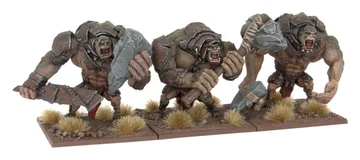
Troop for 140, Regiment for 190: Defence 5+, Crushing Strength (2), Regeneration (5+) and Inspiring (Self), so they don't need a Flaggit next to them.
How to play them: the Regiment is the only goblin infantry that will survive a counter-charge – sixteen attacks with CS (2) do over five damage against Defence 5+, and regeneration keeps it in the game for a long time. They stand on the heavy flank, ideally behind Mawbeasts that tie the opponent up first. They don't have Green Horde, so Mawpups and Rallying don't apply to them – but The Green Wave does, and with Pathfinder they'll get through a wood.
The Troop is too expensive: eight attacks and Nerve 13+ for 140 points is neither cheap chaff nor a real hammer. And 190 points for the Regiment is, in this army, two War-Trombones with change to spare – there were no Trolls in the best American lists.
Artefact: the Blessing of the Gods (25) – almost one extra damage a turn – or the Brew of Haste (20), which means Speed 7, because a unit that never reached the fight deals precisely zero damage. As for spells, Bane Chant: with it, over six and a half damage against Defence 5+.
Mawbeast Pack — B+
Troop for 80: six attacks on 3+, Crushing Strength (1), Vicious and Wild Charge (D3). The Regiment for 125 has twelve. Melee 3+ is the best accuracy of any goblin unit, which says a lot about the rest of the army.
How to play them: the Troop is chaff with teeth – about three damage against Defence 4+ for 80 points. It screens, gets in the way, mops up weak units and finishes off damaged targets, and with Wild Charge it charges 13–15 inches, further than the opponent expects. They're best placed in front of the Trolls or on the flank where the opponent has their own chaff.
But: Defence 3+, Nerve 11+ and Speed 6. Mawbeasts die to any old shooting and don't have Green Horde, so Rallying and Mawpups don't apply to them. It's better to take the Troop, not the Regiment. And no artefacts – this is a unit to lose at a profit, not one to invest in.
Fleabag Rider Sniffs — C
Troop for 105, Regiment for 160. Shortbows at 18", but Melee and Shooting both 5+, Feint and Vicious in melee, Defence 3+ – and, unlike regular Fleabag Riders, no Nimble.
How to play them: this is a fast unit that shoots poorly on the move – the Troop does little more than one damage – and when it stops to shoot better, it throws away its biggest asset. The Troop has its niche as fast scoring and irritating support on a flank: it rides out to a distant objective, picks off stray chaff, blocks the way. The 160-point Regiment does a bit of everything and nothing really well. Artefacts would be wasted on them.
Fleabag Chariots — B+
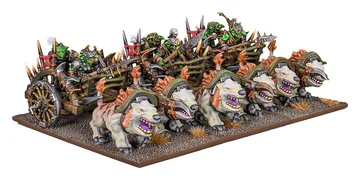
140 points for a Regiment: Speed 9, twelve attacks on 4+, Thunderous Charge (2), Vicious and Brutal (1). For 15 points, eight shots from Shortbows can be added.
How to play them: this is the cheapest mobile hammer in the army. The charge does about six damage against Defence 4+ and earns respect on the flank – the opponent won't be sending their fast units over there without a second thought. After the charge it gets worse: twelve attacks without Thunderous Charge isn't much, and Defence 4+ and Nerve 14+ don't forgive mistakes. The chariots' favourite scenario: two Regiments together, straight into the flank of a unit the Rabble have just stopped in its tracks.
Artefacts: the Pipes of Terror (15), i.e. Brutal (2) – that's how the list that came third at Bugeater 2026 ran them – or the Mace of Crushing for 5. Shortbows are worth adding for the turns without a good charge, not so the chariots can stand around shooting all game.
Support
Mincer Mob — A+
Mincers are converted goblin tunnelling machines. They were built to survive underground explosions and cave-ins, so an ordinary battle on the surface doesn't make much of an impression on them.
220 points, D6+21 attacks on 4+, Crushing Strength (1), Thunderous Charge (1), Brutal (1), Big Shield, Headstrong and Nerve 16+. A goblin meat grinder – and the best hammer in the army.
How to play it: on the charge it does about ten damage against Defence 4+ and eight against Defence 5+. With Big Shield it defends from the front like a Defence 6+ unit, so hardly anyone is keen to charge its front – the opponent will be looking for a flank. That's why the Mincer stands in the second line, behind a screen that takes the first hit, with its sides covered and a clear corridor for the counter-charge. If it's standing in front of the Rabble instead of behind them, somebody's got the order muddled.
The biggest problem is Speed 5, which means a 10-inch charge – the opponent often gets to decide whether to step into its range. Hence the artefacts:
- Brew of Haste (20) – Speed 6 and a 12-inch charge;
- Sir Jesse's Boots of Striding (15) – for that one charge that has to go through a wood or over a fence;
- Brew of Sharpness (45) – two or three more damage, if the Mincer is going to get where it needs to be anyway.
As for spells, Bane Chant from a Wiz: ten damage against Defence 5+ instead of eight. Mawpups won't help it, because the Mincer doesn't have Green Horde.
If the army is meant to actually kill anybody, it starts with the Mincer.
Winggit — C

125 points, Speed 10, Fly, Shooting 4+ and three Firebombs at 12" with Blast (D3), Piercing (1) and Vicious. Plus Eye in the Sky: every turn, one goblin unit with the Lobber trait – a Sharpstick Thrower, Big Rocks, the Mawpup Launcher or Grunk – gets Elite (Ranged).
How to play him: the bombs are two or three damage a turn, but from 12 inches – that is, from somewhere the opponent can easily hit back. Elite for one unit, meanwhile, works out at roughly a sixth more hits – nice, but not much for 125 points. The most interesting thing about the Winggit is something else: he's a flying monster with US 2, so in the last turn he can hop over everything onto an objective nobody else can reach.
In the Support section he's up against the Mincer, the Giant, the Blasters and the war machines. Stiff competition. He makes sense in a list with three or four Lobbers and a plan for the endgame; without that, he's a 125-point flying crate of grenades.
Goblin Blaster — A+
When a Blaster goes off, the goblins cheer. Well, unless they were standing within range of the blast – then they scream.
80 points. Melee 3+, three attacks, Crushing Strength (3), Brutal (1), Fearless and Blast (D6 – Combat). Plus the Boom rule: at the end of the turn in which he hits someone in combat, the Blaster vanishes from the table.
How to play him: he's a goblin missile. Three attacks come to about two hits, Blast splits each one into several more, and with Crushing Strength (3) nearly everything gets through – that works out at about six damage against Defence 4+ and 5+, and almost five against Defence 6+. For 80 points. In Data & Dice's post-Fracture efficiency model he's the second-best result in the whole game – the only thing ahead of him is the Red Goblin Blaster from the Ogres list, which is… also a goblin.
The Blaster is the perfect trade. The opponent doesn't want to let him anywhere near their expensive unit, and shooting at an 80-point model instead of the Mincer is a great deal for the Goblins too. He works best tucked away behind the first line – as a threat that closes a corridor to the opponent, or to finish off a unit that has just got tied up with the Rabble. The grenades can be skipped – he won't achieve anything with them.
Why not S? Because he's single-use, and nobody builds an army around him. A superb trade, but S stays reserved for Rabble and the Wiz.
Goblin Slasher — B

205 points, Titan: Speed 7, Melee 3+, ten attacks with Crushing Strength (2), Defence 5+, Nerve 18+, Strider and a Sharpstick Thrower at 36" (two attacks, Blast (D3), Piercing (2)).
How to play it: it shoots before it gets into combat, and then it has a full fighting profile – no dead turns. In combat it does five or six damage against Defence 4+, and the shooting adds little more than one. With Strider it strolls through terrain as if it were tarmac, so it's best steered to wherever a wood or a fence would stop the rest of the army. In the endgame it has US 2.
For 205 points that's a bit thin on both counts: the Giant at 235 hits harder, and the Mincer at 220 hits twice as hard. Where does it earn its place? In small and medium games, as the army's only "big thing" that doesn't need buffs. A cheap artefact: the Blade of Slashing (5).
Giant — B+
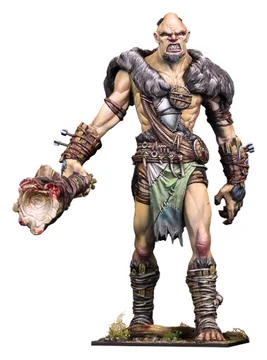
Every goblin king dreams of having a giant in his army – the bigger, the better. It doesn't always pay off: Durgurt the Brute was so huge that when he fell to a dwarf bombard, he flattened the entire goblin army, King Gropp included.
235 points: Defence 5+, Nerve 20+, D6+8 attacks with Crushing Strength (4), Brutal (1), Strider, Height 6 and Rallying for Green Horde. Plus a free choice of weapon: the cleaver gives Slayer (D6 – Combat), the club Rampage (D6 – Combat).
How to play him: he's the best goblin answer to high Defence. With Crushing Strength (4) he does about five damage to any target – a dwarf in full plate gets hurt just as much as a goblin in rags – and without any Bane Chant at that. Cleaver for big targets, club for infantry. With Rallying, a Rabble Horde or Legion standing next to him becomes even more stubborn. And with Strider he gets into places where terrain would stop the rest of the army – which is why it's a good idea to deploy him opposite the opponent's most dangerous unit, ideally with difficult terrain in between.
Downsides: Melee 4+, no regeneration, and at Height 6 he can see everything and everything can see him. Shooting can bring him down in two or three turns. He wasn't in this year's best lists, hence B+ rather than A.
Artefact: the Blessing of the Gods (25) – almost one extra damage a turn. The Brew of Sharpness (45) would give one and a half, but the Mincer has probably pinched it already.
Sharpstick Thrower — B+
65 points, 48" range, two attacks, Blast (D3), Piercing (2) and Reload. A war machine with the Lobber trait.
How to play it: on its own it's a lottery – one and a half damage a turn on average. But for 65 points! Two or three of these shooting at the same target are a real problem for the opponent, and 48 inches means they're firing from turn one. They stand in the corners and at the back, well away from anything with legs, and every turn they work over the same target as the rest of the battery. In the last turn they can stand on an objective in their own zone (US 1).
Big Rocks Thrower — B-
75 points, 48", two attacks, Blast (D3+1), Indirect, Piercing (3) and Reload. Shooting 6+. Yes, six plus again.
A single Big Rocks can spend half the battle reminding everyone why goblin artillerymen don't work in ballistics labs. But once it does hit, Piercing (3) and Blast (D3+1) hurt even heavy armour – as much against Defence 5+ as against 4+, about one and a half damage a turn.
How to play them: only in a battery. The list that came second at US Masters 2026 had four Big Rocks and not a single Sharpstick Thrower. In a battery the randomness stops being a problem, and it's the cheapest goblin long-range answer to high Defence – in other words, to Dwarfs and Undead, the armies Goblins have the most trouble with.
War-Trombone — A-
Trombones are converted ogre blunderbusses. They're too heavy for a goblin to lift, so they go on wheels, and they get loaded with whatever comes to hand: old shot, bits of armour, nails and Mawbeast dung.
75 points, twelve shots on 4+ with Piercing (1). Range: 12 inches. Nerve 10+. On paper it sounds like a joke – a war machine that has to get within spitting distance.
And yet it's the goblin war machine that turns up most often in top lists. After a Halt!, twelve dice on 3+ come to about five damage against Defence 4+ – for 75 points, the best dice-to-price ratio in the whole goblin artillery.
How to play it: the Trombone is a trap. It stands behind the Rabble, and when the opponent crashes into the screen or comes out of it, they get a concert right in the face. Three of these orchestras at once is fifteen or more damage into a single unit, which does a fine job of putting people off charging the centre. It has no Reload, so it can roll forward and play in the same turn – on 4+ then, for about four damage.
It's just better not to put it in the front line. With Nerve 10+ the concert ends quickly and with no encore.
Mawpup Launcher — B

90 points, 36", three attacks, Blast (D3), Indirect, Reload and Shattering (D3). Plus the They look so cute rule, the most goblin idea in the entire catalogue: the Mawpups can be fired at a friendly Green Horde unit – even one that's already fighting – and instead of taking damage it gets Vicious in melee until the end of the turn.
How to play it: as artillery it's average – without Piercing, it's about one and a half damage against Defence 4+, and even less against tougher targets. Shattering helps finish off morale, but this is support, not a main gun. It's most interesting as a buff: Luggits with Bane Chant from a Wiz and Vicious from the Mawpups do almost eight damage against Defence 5+ instead of five. A properly nasty mix. It won't pep up the Mincer or the Trolls, because they don't have Green Horde.
This year's top lists had no Mawpups – the best Goblin lists simply preferred more Trombones and Big Rocks. One per list, if there's someone to support.
How to play Goblins
A cheap first line, a second line that hurts
The simplest goblin setup is also one of the best:
- Rabble → Mincer
- Sharpsticks → Luggits
- Mawbeasts → Trolls
The first unit takes up space, soaks up the charge and puts the opponent where they need to be. The second makes the most of whatever just happened.
That matters, because goblin hammers don't like taking the first hit. The Mincer needs to save its attacks for the counter. Luggits aren't particularly tough. Trolls would rather get into a fight on their own terms than soak up the shooting of the opponent's entire army.

Game plan
- Deployment. Twenty-odd units against a dozen or so is an advantage that's already at work before the first turn. The less important stuff goes down first – Rabble and war machines – and then it's just a matter of watching where the enemy hammer lands. The Mincer, the Giant, the chariots and the main battery go down last, exactly where they ought to be.
- First turns. The Rabble take objectives and space. Big Rocks and Sharpstick Throwers fire from turn one – always at one target, not five. The Wizzes cast Blizzard, and Weakness goes on the enemy hammer before it reaches the goblin line.
- Mid-game. The opponent crashes into the screen. The Trombones play a concert into whatever got through, the Mincer, Luggits or a Blaster go into the flank of the unit that got tied up with the Rabble, and the Horde that's fighting gets Unleash the Mawpups. Bloodboil and Mind Fog finish off whatever is already bleeding.
- Endgame. Unit Strength is what counts. An 80-point Rabble Regiment on an important objective forces a response from a unit worth two or three times as much, and the Biggit, the Winggit and the Fleabags bring in the last few points. A list with fourteen Rabble Regiments simply has more votes in that election.
Gunline or hammer – one or the other
This year's biggest success at a major tournament came from lists that went all in on the gunline: loads of Rabble, three or four Trombones, a battery of Big Rocks, four Wizzes, several Flaggits. The list that came second at the US Masters had no Mincer, no Giant and no Trolls – it won on unit count, Unit Strength and firepower. It's worth remembering, too, that Goblins shot almost three times as much as average yet dealt slightly below-average damage – their edge isn't wiping everything out at range, but combining shooting with a mass of units and pressure on the scenario.
At Clash of Kings every Goblin list went for combat, and it didn't work out for any of them – even though before Fracture similar lists had been winning British tournaments. With Melee 5+ on nearly everything, Goblins won't win a shoving match against armies that were made for melee.
That doesn't mean the hammer is bad. One proper Mincer behind a Rabble screen is a great addition. But an army that wants to shoot, fight and hold ground all at once usually does none of those things well. It's best to pick one plan and make everything else serve it.
No self-inflicted gridlock
Twenty-odd units give enormous control of the table, but the goblins' own moves still have to fit on that same table.
Rabble placed five millimetres in front of the Mincer look like a great screen – until, after the fight, it turns out the Mincer has nowhere to charge. Trolls need a corridor. Fleabags need a route to the flank. Artillery needs a line of fire. With Goblins it's very easy to create a traffic jam the opponent didn't even have to plan. All they have to do is wait.
And then there's the clock: with thirty units the game really does take a while. The opponent will be grateful for brisk moves. So will the chess clock.
What to be scared of
- Dwarfs and Undead. In the set of seventeen 2026 tournaments, these were the matchups Goblins struggled with most. Against high Defence, cheap shooting without Piercing and Melee 5+ just don't do enough, and against an army that plays with its own mass and high Nerve, the advantage in drops and scoring disappears. If there are plenty of Dwarfs in the field, the list needs something to open them up with: a Big Rocks battery, a Wiz with Alchemist's Curse, the Giant, or Sharpsticks with the Hammer of Measured Force. Another Rabble Regiment won't sort that out.
- Shoving matches in the middle. Goblins who try to win a melee against an army built for melee end up like the lists at Clash of Kings.
The good news: this year Goblins had a positive record against Orcs, Elves, Ogres and Salamanders. Those are armies that have to come to the goblin line and punch through a mass of Unit Strength before the game runs out. At the US Masters, Goblins won all four games against Elves and all three against Orcs.
Small games
Up to 1000 points – Goblins in miniature:
- a Biggit (105);
- a Flaggit (60);
- a Wiz with Bane Chant (75);
- two Rabble Regiments (160);
- a Sharpsticks Horde with the Mace of Crushing (150);
- a Mawbeast Pack Troop (80);
- a Mincer Mob (220);
- two War-Trombones (150).
1000 points in total and ten units. One hammer, a screen for it, two Trombones, Very Inspiring and Bane Chant for the Mincer.
The version without a hammer: instead of the Mincer and the Mawbeasts, two more Rabble Regiments and two Sharpstick Throwers, the Sharpsticks Horde without an artefact, and the Wiz gets Blizzard (3) instead of Bane Chant. Also exactly 1000 points, but twelve units.
Medium games
At 2000 points – a smaller version of the US Masters list, with one hammer:
- a Flaggit with The Boomstick (90);
- a Flaggit on a Fleabag (75);
- a Wiz with Blizzard (4) (95);
- a Wiz with Bane Chant and Bloodboil (105);
- eight Rabble Regiments (640);
- a Sharpsticks Horde (145);
- a Mawbeast Pack Troop (80);
- a Mincer Mob with the Brew of Haste (240);
- two War-Trombones (150);
- two Big Rocks Throwers (150);
- two Goblin Blasters (160);
- a Sharpstick Thrower (65).
1995 points in total and 22 units. The Rabble hold the table, the battery shoots, and the Mincer and two Blasters wait for the counter-attack.
What not to do: the Giant and the Mincer together below 2000 points. Too many points sunk into two slow models.
Big games
At 2300 points, the best thing is to look at the list that came second at US Masters 2026:
- three Flaggits (one with The Boomstick, one on a Fleabag, one on a Fleabag with the Diadem of Dragonkind);
- four Wizzes – with Blizzard (4), with Bloodboil on a Fleabag, with Alchemist's Curse (4) on a Fleabag, and with Lightning Bolt (3);
- fourteen Rabble Regiments;
- four Big Rocks Throwers;
- three War-Trombones.
28 units, US 42 and not a single Warlord. A mass of scoring that can't be cleared in six turns, a battery that focuses its fire, magic that finishes things off, and Very Inspiring wherever something green is standing.
The version with a hammer is the list that came third at Bugeater 2026:
- Groany Snark;
- a Flaggit and three Wizzes;
- three Hordes and four Regiments of Rabble;
- a Mincer with the Brew of Sharpness;
- Fleabag Chariots with the Pipes of Terror;
- Fleabag Riders with Maniacs and Sir Jesse's Boots of Striding;
- a Troop of Fleabag Rider Sniffs;
- a Goblin Blaster;
- three War-Trombones.
Twenty units and everything the opponent hates: mass, a counter-punch and something fast on the flank.
Pitfalls:
- The premium version. Goblins lose their edge when cheap units get artefacts and upgrades and start costing as much as other armies' normal regiments. One "proper" artefact on the Mincer, everything else cheap – ideally spell artefacts on the Flaggits.
- Too much fighting. Clash of Kings showed that Goblins built for brawling lose to armies that are better at brawling.
- Too few bodies. The Goblins' strength is twenty-odd units and US above 35. Every expensive model that eats up the space of three Rabble Regiments weakens the part of this army that actually works.
Goblins are at their strongest when the opponent has to solve several problems at once. The Rabble sit on the scenario, the battery works over an important target, a Blaster shuts a corridor, the Mincer waits behind the screen, and out on the wing the Fleabags force someone to babysit the flank. None of those pieces has to be special. And that's the whole punchline.
We write these articles in our spare time, with no ads. If this one helped you, ☕ buy us a coffee.